
If you haven’t received your verification email, please Contact Us
Free platform for law enforcement to deconflict overlapping cryptocurrency investigations across agencies. Built by federal agents, used worldwide.
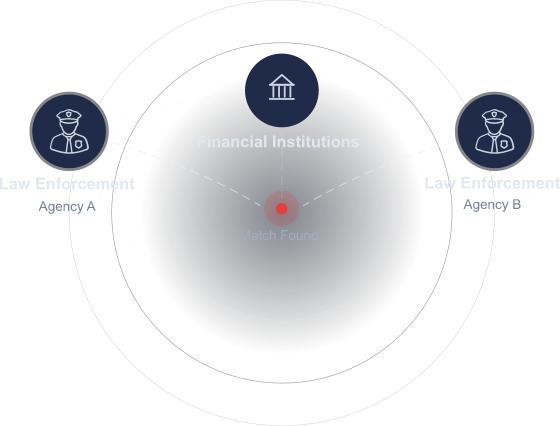
This will prevent Blue on Blue incidents. It is a must have!
There's absolutely a need for this. It brings huge value to our work.
The best tools are made by those who already know the craft. Deconflict is exactly that.
I use it daily for cross-checking investigations. It's my go-to for every crypto case.
From federal agencies to major city departments, Deconflict coordinates to prevent overlapping investigations, saving time and resources.

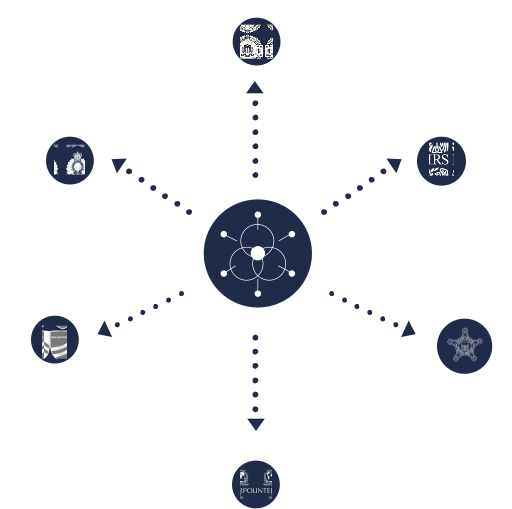
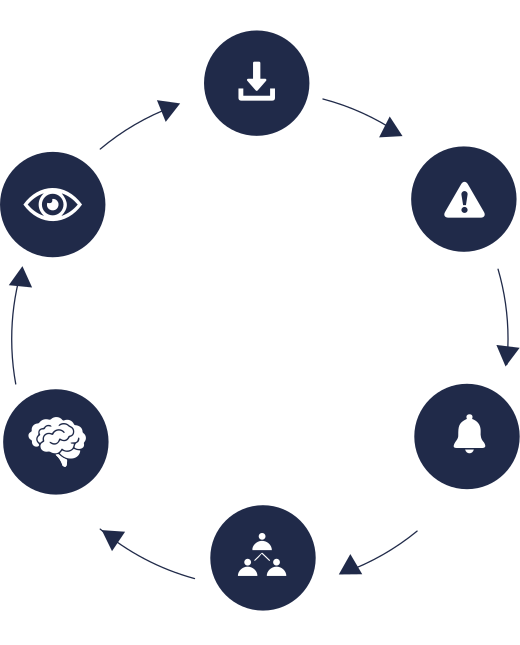
Agencies and institutions submit wallet addresses, and our system helps uncover connections and network relationships.
The network continuously scans for overlaps, anomalies, and emerging fraud patterns across participating entities.
When conflicts or risks are detected, relevant agencies and institutions receive precise, minimal‑exposure alerts.
Investigators connect securely to deconflict cases, align actions, and avoid duplicate subpoenas or conflicting operations.
Confirmed case outcomes feed back as structured signals, strengthening risk models and compliance decisions.
Continuous network monitoring ensures new activity on known entities is surfaced before it becomes a costly mistake.
“Every investigator I speak with recognizes the need for this tool, it’s indispensable in the field.”

Automatically identifies when multiple agencies are working the same wallets or subjects, so teams can coordinate instead of colliding and avoid duplicative subpoenas.
Agencies share only essential identifiers such as wallet addresses and limited metadata. Full case narratives, suspect identities, victim information, and operational plans never leave the originating agency.
Delivers automated alerts when investigations overlap on the same on‑chain entities, while keeping all investigative files, tactics, and operations fully siloed from other participants.
Verified law enforcement and regulated financial institutions share only essential identifiers, like wallet addresses and risk indicators, while retaining full control of case files, investigations, and internal systems.
Platform aggregates essential case identifiers from participating agencies into unified risk intelligence, accessible to all network members without exposing sensitive investigative details.
Platform enhances coordination without replacing existing investigative workflows. Agencies retain full autonomy over case management and investigative decisions.
Automatically identifies when multiple agencies are working the same wallets or subjects, so teams can coordinate instead of colliding and avoid duplicative subpoenas.
Agencies conduct redundant blockchain analysis, duplicate evidence collection efforts, and repeat investigative steps already completed by other jurisdictions.
Traditional intelligence sharing requires full case disclosure to achieve coordination. Most agencies cannot share case details across jurisdictions, preventing effective deconfliction.
Transaction monitoring systems flag cryptocurrency activity based on algorithmic patterns, not confirmed fraud. High false positive rates overwhelm compliance teams and lack evidentiary support for account actions.
Examiners require documented rationale for suspicious activity reports and account closures. Pattern-based tools cannot provide investigative context needed to defend compliance decisions.
Financial institutions cannot access investigative intelligence from law enforcement agencies. Blockchain analysis tools provide transaction patterns but no information on which addresses are tied to active investigations.
Cryptocurrency exchanges need real-time fraud intelligence to block malicious deposits before funds enter their systems. Traditional tools identify fraud patterns after transactions occur too late to prevent deposits.
Regulators demand proactive illicit activity detection with auditable documentation. Exchanges must demonstrate reasonable measures to prevent illicit activity—blockchain heuristics alone insufficient for regulatory defense.
Blockchain analytics identify suspicious patterns. They cannot identify which specific addresses are subjects of active law enforcement investigations without access to case data.
Automated conflict detection when agencies submit cryptocurrency addresses tied to investigations. System alerts affected agencies to overlaps without exposing case files.
Fraud detection trained on confirmed case data from participating agencies, not blockchain pattern analysis.
Wallet analysis, counterparty identification, and transaction pattern reports supporting investigations and prosecutions.
Programmatic intelligence delivery integrates with existing case management systems, compliance platforms, and transaction monitoring infrastructure.
Each agency submission strengthens collective investigative capability. Individual wallet reports create network-wide threat visibility unavailable from isolated agency analysis.
All communications and data storage conducted through encrypted channels. Platform meets law enforcement information security requirements for sensitive but unclassified systems.
A Threat Intelligence and Deconfliction Platform for Law Enforcement and Financial Institutions