
If you haven’t received your verification email, please Contact Us
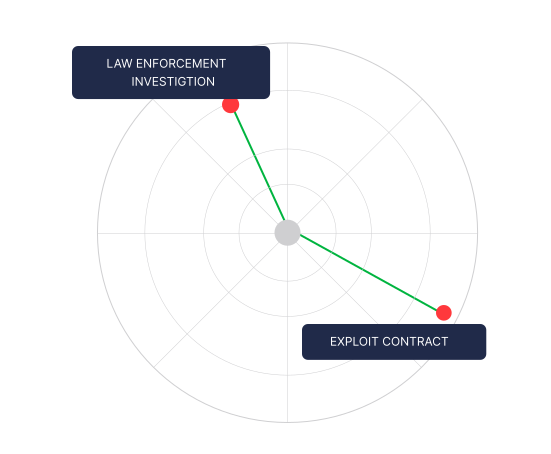
Automatically identifies when multiple agencies are working the same wallets or subjects, so teams can coordinate instead of colliding and avoid duplicative subpoenas.
Wallet Overlap Detection Automatically identifies when multiple agencies are working the same wallets or subjects, so teams can coordinate instead of colliding and avoid duplicative subpoenas.
Delivers automated alerts when investigations overlap on the same on‑chain entities, while keeping all investigative files, tactics, and operations fully siloed from other participants.
Agencies receive immediate notification upon case overlap detection. This enables resource reallocation away from duplicative work and creates coordination pathways for complex multi-jurisdictional matters.
Regulated entities access investigative-grade intelligence to substantiate monitoring alerts and strengthen examination documentation. API responses provide third-party corroboration for account action rationale.
Individual wallet submissions create cumulative analytical value across the network. Pattern recognition across concurrent investigations surfaces structures invisible to single-entity analysis.
Network participation requires verified law enforcement status or regulated financial institution classification. Credentialing processes validate organizational authority prior to intelligence access authorization.
Tiered access controls govern intelligence distribution according to participant category and operational necessity. Sensitive investigative indicators remain restricted to appropriately credentialed entities.
Delivers automated alerts when investigations overlap on the same on‑chain entities, while keeping all investigative files, tactics, and operations fully siloed from other participants.
Platform architecture prohibits transmission or storage of personally identifiable information, victim data, or case narratives. Privacy protection is structural, not policy-based.
All communications, intelligence products, and network activities are protected by enterprise-grade encryption meeting federal security standards for sensitive law enforcement and financial information.
Platform logging captures complete intelligence attribution and access records. Documentation supports oversight requirements and evidentiary standards for legal proceedings.
Real-time deconfliction notifications reduce operational overlap and BLUE-ON-BLUE risk between agencies pursuing related subjects. Early identification protects ongoing investigations and establishes coordination pathways prior to conflict.
Identification of duplicative case activity enables reallocation of resources toward unique analytical requirements. Case development timelines compress when agencies leverage existing network intelligence.
Network participation creates cumulative analytical capability exceeding isolated agency capacity. Multi-source aggregation surfaces patterns invisible to single-entity analysis.
Intelligence products derive from credentialed law enforcement submissions. This sourcing methodology provides evidentiary foundation suitable for judicial proceedings.
Real-time deconfliction notifications reduce operational overlap and BLUE-ON-BLUE risk between agencies pursuing related subjects. Early identification protects ongoing investigations and establishes coordination pathways prior to conflict.
Identification of duplicative case activity enables reallocation of resources toward unique analytical requirements. Case development timelines compress when agencies leverage existing network intelligence.
Network participation creates cumulative analytical capability exceeding isolated agency capacity. Multi-source aggregation surfaces patterns invisible to single-entity analysis.
Intelligence products derive from credentialed law enforcement submissions. This sourcing methodology provides evidentiary foundation suitable for judicial proceedings.
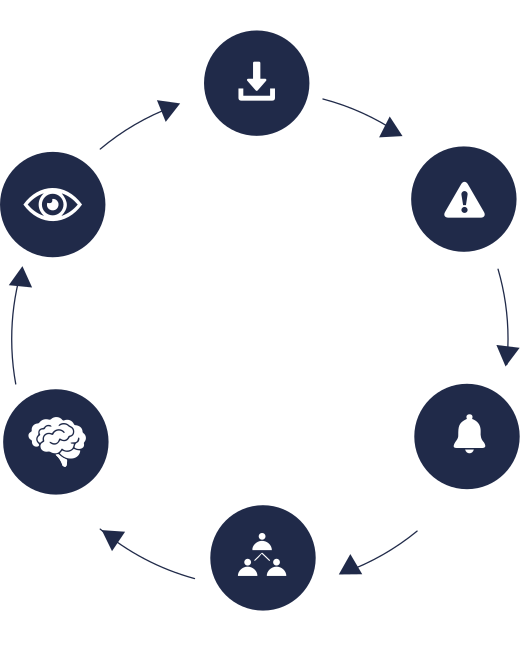
A Threat Intelligence and Deconfliction Platform for Law Enforcement and Financial Institutions